
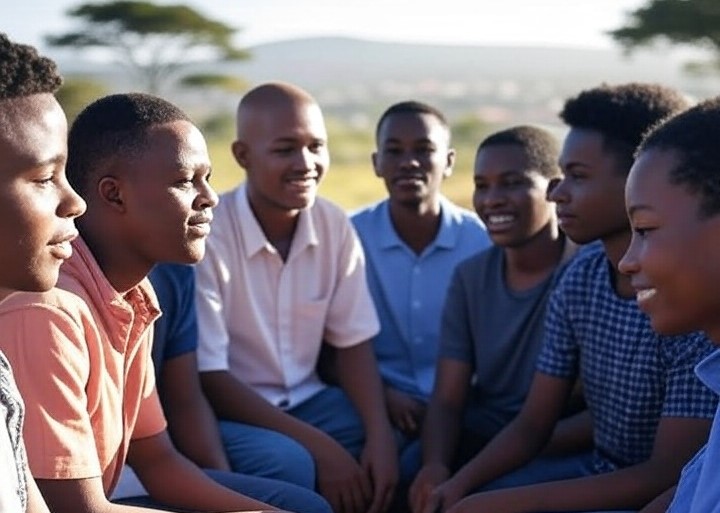
In 2025, Africa stands at a pivotal moment in its pursuit of the Youth, Peace and Security (YPS) agenda. Since the adoption of UN Security Council Resolution 2250 and the African Union’s Continental Framework on YPS, progress has been made in recognizing youth as agents of peace rather than passive beneficiaries. Countries like Kenya, The Gambia, and Nigeria have launched National Action Plans (NAPs) to institutionalize youth participation in peacebuilding. Yet, despite these strides, implementation remains uneven. As noted at the African Union Summit’s 2025 High-Level Side Event, “the low rate of NAP development and implementation is a cause for concern”.
Threats on the Horizon: Climate, Conflict, and Governance
Africa’s youth face a convergence of existential threats. Climate change is no longer a distant concern; it’s a daily crisis. In 2024 alone, over 700,000 people were displaced by floods, droughts, and heatwaves across the continent. Conflicts in Sudan, the Sahel, and the Horn of Africa continue to destabilize communities, with youth often caught between recruitment and displacement. Meanwhile, youth unemployment remains alarmingly high, with over 60% of Africa’s unemployed being under 25. Governance challenges, ranging from corruption to exclusionary politics, further erode trust. As Gilbert Ang’ana of the European University Institute notes, “Africa’s governance crisis is not just political, it’s economic, costing the continent nearly 6% of its GDP annually”.
The Evidence Is Clear
The 2025 Peacebuilding Fund Thematic Review underscores that youth-led peace initiatives are more sustainable and locally rooted than top-down interventions. In The Gambia, over 2,000 stakeholders, including marginalized youth, were engaged in shaping the YPS NAP, resulting in a more inclusive and actionable framework. Kenya’s new NAP integrates AI-driven tools to crowdsource youth input, signaling a shift toward digital civic engagement. Moreover, the African Climate Change Impact Report warns that without youth-centered adaptation strategies, climate shocks will continue to fuel conflict and migration.
What Must Be Done
To advance the YPS agenda meaningfully, four actions are urgent:
- Climate Resilience: Invest in youth-led green innovation and climate-smart agriculture. As Evan Selinger argues, “Africa’s youth are its greatest renewable resource”.
- Conflict Prevention: Scale up grassroots peacebuilding and reintegration programs, especially in post-conflict zones.
- Employment & Skills: Align education with market needs and support youth entrepreneurship through access to finance and mentorship.
- Governance Reform: Foster intergenerational leadership and transparency. As Andrea Ngombet warns, “Without inclusive governance, youth disillusionment will deepen”.
Towards a Peaceful Future.
Despite the challenges, the momentum is real. The African Union’s “Pact for the Future” and the growing network of youth-led peacebuilders signal a generational shift. As Judy Kimaru of Search for Common Ground puts it, “Youth are not just beneficiaries of peace, they are its architects”. With strategic investment, inclusive governance, and climate foresight, Africa can transform its youth bulge into a peace dividend.
Let 2025 be the year we stop asking what youth can do for peace, and start enabling them to lead it.
Article by Executive Director, CELEG
