
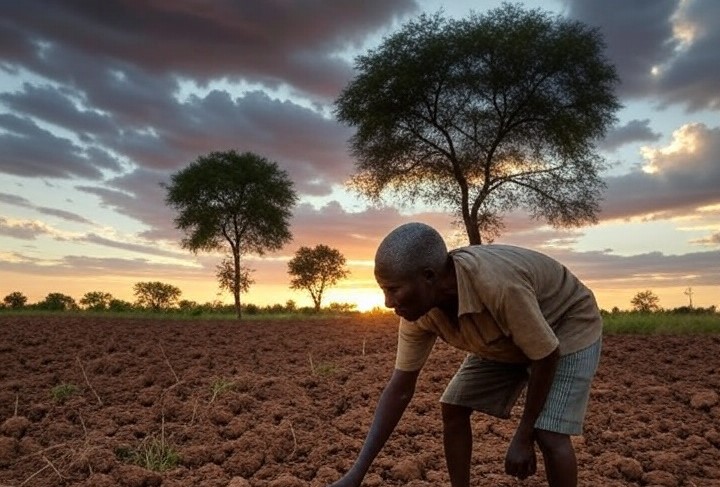
Africa stands at the frontline of climate change. From the Sahel to the Swahili coast, the continent is warming faster than the global average. Yet, as the climate crisis accelerates, our response (both in adaptation and mitigation) is lagging dangerously behind. According to the African Initiative on Climate Change, “Africa contributes less than 4% of global emissions, yet bears the brunt of its consequences.” The question is no longer whether climate change is real; it’s whether we’re ready and proactive in mitigating its effects.
What’s at Stake: Lives, Livelihoods, and the Future
The stakes are existential. The African Development Bank warns that climate change could slash Africa’s GDP by up to 15% by 2030 if urgent action is not taken. Food systems are already under strain, with erratic rainfall and prolonged droughts threatening agriculture, which employs over 60% of the continent’s workforce. Rising sea levels imperil coastal cities like Lagos and Dar es Salaam, while heatwaves and floods are displacing communities and overwhelming fragile infrastructure. As Professor Michael Addaney notes, “Climate change is not just an environmental issue, it’s a development emergency.”
The Evidence Is Clear: Shifting Weather, Real Consequences
The signs are everywhere. In 2023, Kenya experienced its worst drought in 40 years, leaving over 4 million people food insecure. Meanwhile, Cyclone Freddy battered Malawi and Mozambique, displacing hundreds of thousands and causing over 1,000 deaths. In West Africa, rainfall patterns have become increasingly erratic, disrupting planting seasons and triggering food shortages. These are not isolated events—they are the new normal. As CHAI (Climate Change Adaptation Innovation) reports, “Communities are adapting, but the pace and scale of change are outstripped by the speed of climate impacts.”
What Needs to Happen: From Rhetoric to Resilience
Africa must pivot from reactive crisis management to proactive climate resilience. This means:
- Scaling up climate finance: Africa receives only 3% of global climate finance. This must change.
- Investing in local adaptation: Indigenous knowledge and community-led solutions are vital.
- Strengthening governance: Climate-smart policies must be integrated into national development plans.
- Empowering youth and innovation: Africa’s young population is its greatest asset, if equipped with green skills and opportunities.
As the Springer volume Climate Change in Africa: Adaptation, Resilience, and Policy Innovations emphasizes, “Policy coherence, local ownership, and inclusive governance are the pillars of effective climate action.”
A Continent of Possibility
Despite the challenges, Africa is not a victim; it is a wellspring of innovation and resilience. From solar-powered irrigation in Senegal to climate-smart agriculture in Rwanda, solutions are sprouting across the continent. With the right investments, partnerships, and political will, Africa can lead a new era of climate-smart development. As Hany Besada of the Centre for International Governance Innovation puts it, “Africa’s climate future is not written in stone—it is written in the choices we make today.”
Article by CELEG’s policy team
